Welcome to our health library. The information shared below is provided to you as an educational and informational source only and is not intended to replace a medical examination or consultation, or medical advice given to you by a physician or medical professional.
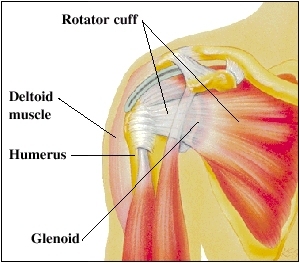
The rotator cuff is a powerful team of muscles and connecting tendons. These muscles and tendons attach your upper arm to your shoulder blade. Your rotator cuff helps you reach, throw, push, pull, and lift. Without it, your shoulder would be nearly useless.
A healthy rotator cuff gives your shoulder flexibility, and control. The muscles and tendons of the rotator cuff hold your upper arm bone (humerus) in your shoulder socket (glenoid). Your rotator cuff also assists the large muscle covering your shoulder (deltoid muscle) with movements.
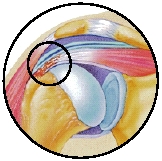
Pain told you that something was wrong with your shoulder. Now that you know it's a rotator cuff problem, you may wonder what caused it. Rotator cuff tendons can become damaged or inflamed (tendinitis) in many ways. These include irritation (overuse), pinching (impingement), calcium deposits (calcification), and splitting (tears). Any of these conditions can make your shoulder weak, tender, and painful.
Care for your injury will most likely begin with nonsurgical treatments ranging from simple rest to pain-soothing injections. Your doctor will tell you how often you may need these treaments. If the treatments relieve your pain, you will be given an exercise program to restore your shoulder's power. If your pain just won't quit, you and your doctor may decide you need surgery.
Publication Source: American Academy of Orthopaedic Surgeons
Online Source: American Academy of Orthopaedic Surgeons
Date Last Reviewed: 2007-01-15T00:00:00-07:00
Date Last Modified: 2002-07-09T00:00:00-06:00
For more information, call Dr. Walker at 972.392.3330 or use our Online Appointment Request Form today!