Welcome to our health library. The information shared below is provided to you as an educational and informational source only and is not intended to replace a medical examination or consultation, or medical advice given to you by a physician or medical professional.
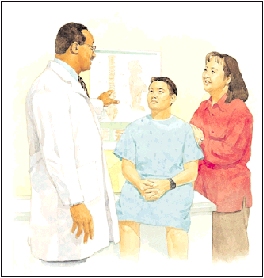
If a school screening or your doctor finds signs of scoliosis, you'll visit a special bone doctor (orthopaedist) for an evaluation. This visit helps determine what treatment may be best for you now.
Your bone doctor may:
Ask you about your medical history (for instance, whether you've ever had surgery) and family history (whether someone in your family has scoliosis)
Take x-rays of your back to get a closer look at your spine
Decide how much more you are likely to grow. (To help do this, the doctor may ask girls whether they've gotten their period yet.)
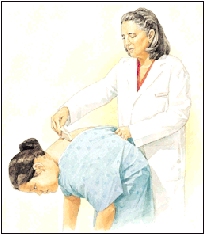
Examine your back while you're standing up and bending over
Measure the size, location, and pattern of the spinal curve
Test how flexible your spine is, and how strong your back and neck muscles are
A serious spinal curve that isn't treated can get worse as you grow. Over time, it may cause problems. These can include:
Back pain
Arthritis in your back
Your body looking twisted
Clothes not fitting right
Heart and breathing problems (rare)
Date Last Reviewed:
Date Last Modified: 2002-07-09T08:39:52-06:00
For more information, call Dr. Walker at 972.392.3330 or use our Online Appointment Request Form today!