
Welcome to our health library. The information shared below is provided to you as an educational and informational source only and is not intended to replace a medical examination or consultation, or medical advice given to you by a physician or medical professional.
The most common back problems occur when disks tear, bulge or rupture. In such cases, an injured disk can no longer cushion the vertebrae and absorb shock. As a result, the rest of your spine may also weaken. This can lead to pain, stiffness, and other symptoms.
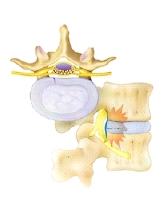
Torn annulus. A sudden movement may cause a tiny tear in an annulus. Nearby ligaments may stretch.
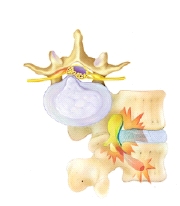
Contained herniated disk. As a disk wears out, the nucleus may bulge into the annulus and press on nerves.
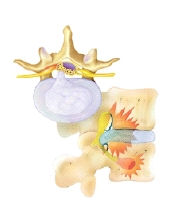
Extruded herniated disk. When a disk ruptures, its nucleus can squeeze out and irritate a nerve.
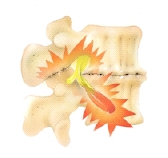
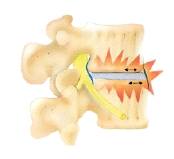

Arthritis. As disks wear out over time, bone spurs form. These growths can irritate nerves and inflame facets.
Instability. As a disk stretches, the vertebrae slip back and forth. This can put pressure on the annulus.
Spondylolisthesis. A crack (stress fracture) can develop in a vertebra. This may put pressure on the annulus, stretch the disk, and irritate nerves.
Date Last Reviewed: 2007-01-15T00:00:00-07:00
Date Last Modified: 2005-04-04T00:00:00-06:00
For more information, call Dr. Walker at 972.392.3330 or use our Online Appointment Request Form today!